cropped-3-2.png

Idea to Image – Illustrating my first book

Illustrations make stories come to life. And while I could write a story, I was a total novice at illustrating a book. Thankfully, I figured out the path with the help of my publisher, Heather.

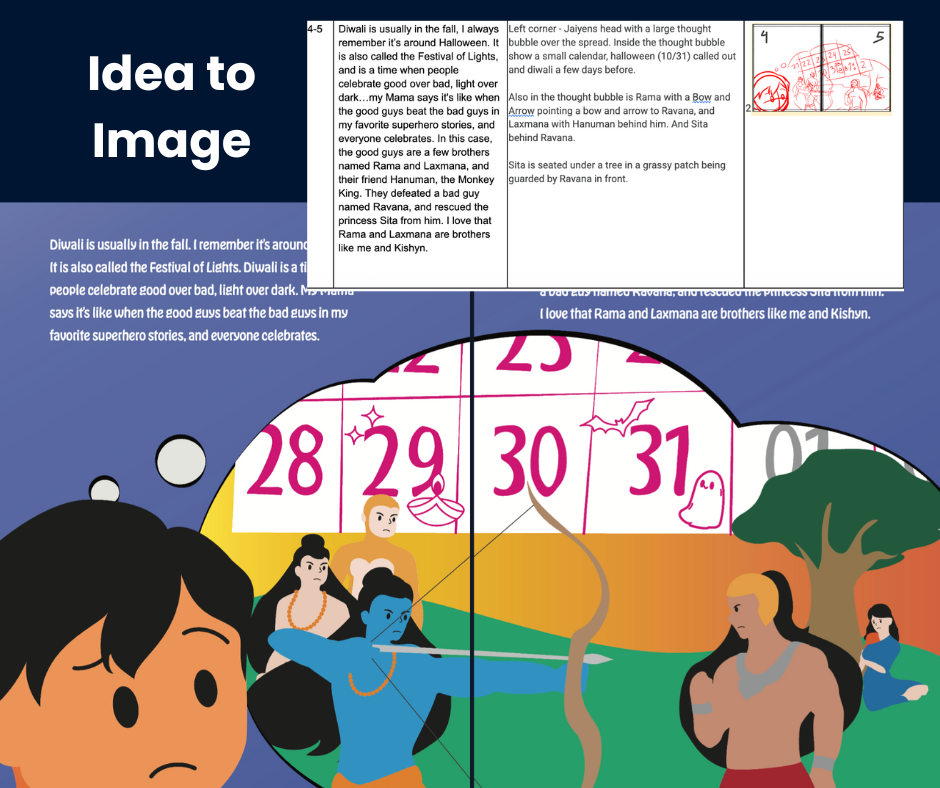
My first book, Shine a Light, was illustrated by a traditional illustrator. I learned how to lay out my story and describe my scenes, as seen in this graphic. Luckily, I take a lot of photos so I used those as inspiration for my scenes, and I visualize in my mind the experience the reader will have.

It is so important to describe the scene, not just the story, to an illustrator.

For my second book, we were tight on timing. I could not get in touch with my past illustrator, so we went to Fiverr to find someone new.

Unfortunately, the quality was poor, the work was delayed, and they were clearly using AI. So, I had to take matters into my own hands to get the book done in time.

I took my ideas from my layout into Canva and used traditional paid images, and I also dabbled with Canva AI. I changed the layout style from full-page illustrations to an early reader style, with less illustrations and cleaner pages.

I pivoted to meet my deadline, and create an award-winning book.

For the next books, I changed course again. I took real family photos and ran them through ChatGPT. Combining these with some Canva images and editing, we created a full-page, illustrated story in a week.

Why this story?

I have tried all the styles. I know how they all work. I do what works for my timeline, budget, and quality needs, and purpose.

In a world where AI is all around, there are some places where AI is encouraged and some where it is not. But when my paid professional was using it (and inconsistently too) I had to take permission to also.

I share all of these options with authors during my workshops. If you need help navigating illustrations, consider grabbing a copy of the video and our free Author & Creator worksheet.


Follow our newsletter to stay up to date on monthly happenings: LINK to newsletter

Connect with us about events, author visits, and other activities here: admin@parullbhandari.com 

Follow us on Instagram https://www.instagram.com/parul_bhandari_author
On my writing journey, and how you can create your own

I didn’t start writing because I wanted to be a writer.

I started writing because I loved stories.

When I was young, I devoured books to learn about the world- past and present. I loved and still love historical & fiction stories from the Mahabharata to Ann of Green Gables. 

When I read enough, it inspired me to write.

Writing has always been my way of holding two truths at once. Logic and emotion. Strategy and story. Culture and identity. 

Writing as a way to document life

My writing has often been experiential stories about what has happened to me. 

When I was 10, my parents went to India for a family passing, and I stayed home with friends. My first chapter book was called “May with April” about a girl who has an extended stay with friends, and all the ups and downs. 

In college, I branched out to poetry, and wrote about all the different experiences and emotions of those friendships and relationships.

As a young adult, I  started writing about South Asian stories - of women, of experiences, of life. I wrote more sporadically after that, with career and life taking over.

Writing for the Next Generation

Then something shifted.

I became a mother, and suddenly the stories I cared about expanded. I started paying attention to what my children were reading, and what they weren’t. I noticed whose cultures were visible and whose were invisible. Which holidays were explained, and which were simplified or skipped.

I began writing children’s books not to teach lessons, but to offer mirrors.

Stories where culture wasn’t exotic.

Where food, family, and tradition were normal.

Where curiosity was rewarded, not corrected.

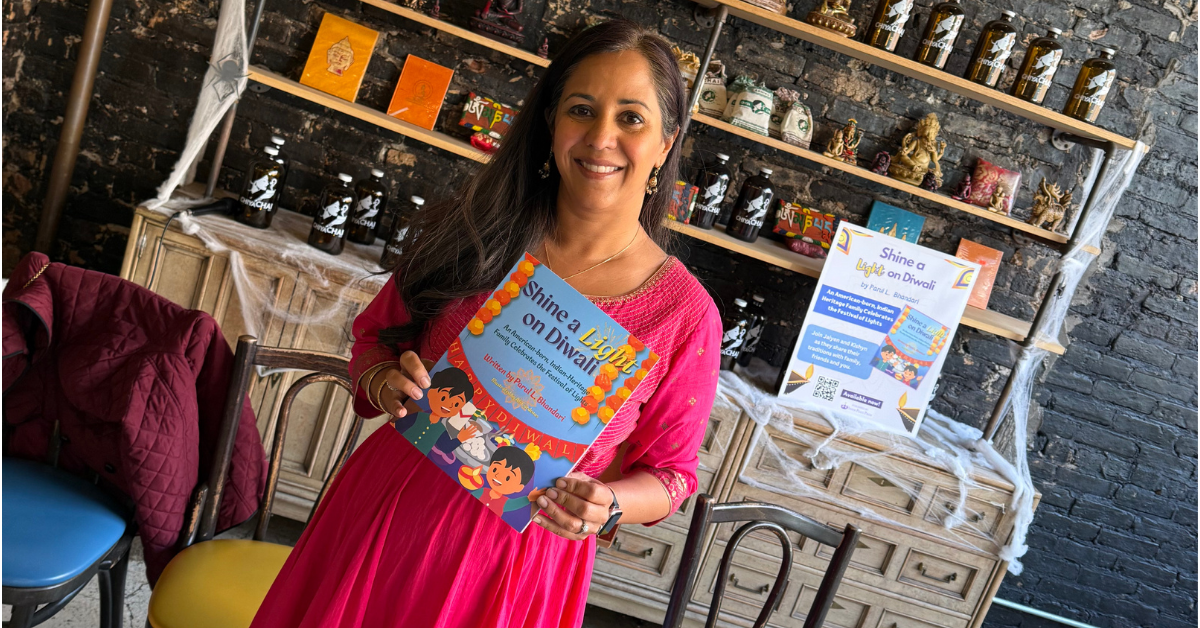
Books like Celebrate All Colors, Shine a Light on Diwali, Dal Bati with Dadi, and Cooking Up Culture came from a simple place: I wanted children, mine and others, to feel seen without explanation.

Writing Through Change and Constraint

In recent years, my relationship with writing deepened again, the more I do it the more the creativity flows. I am exploring my old work, and creating new work.

I am convinced I have opened up the creative energy/gateway for myself again. And I love it.

How to start your writing journey

My simple message to you, is to start by writing down your ideas. 

In a note, a notebook, a journal, a doc. You choose.

The ideas you write down are ones you can remember and build on. Your experiences can launch your first writing project or help you discover another.

Just get started. And see what comes.

if you are someone who wants to learn about crafting your own story, you're launching our first workshop series starting next Saturday. Link here to join.

Do you like what you read and subscribe to my newsletter?

Visit us for all the events… www.parullbhandari.com

Why Diverse Stories Are Essential for Growing Empathy and Cultural Awareness

Children’s books are more than just stories; they are windows into new worlds, experiences, and perspectives. Reading multicultural and inclusive children’s books allows children to see life through different eyes, fostering empathy, curiosity, and understanding of cultures beyond their own. In today’s global world, exposing children to diverse stories from an early age is essential for their growth and development.

Why Diverse Stories Matter for Kids
Books that celebrate diversity help children appreciate differences and find common ground. Research shows that children who read inclusive books for kids develop stronger social and emotional skills, including empathy, kindness, and problem-solving. By seeing characters who look, live, or think differently than they do, kids learn that every story matters and every voice deserves to be heard.

When choosing books, look for stories that reflect authentic experiences. Titles like Shine a Light on Diwali or Celebrate All Colors show children that cultures and traditions are vibrant, meaningful, and worth exploring. Using diverse children’s books helps children feel seen while encouraging curiosity about other cultures.

Interactive Reading and Activities
Reading becomes more meaningful when it is interactive. Parents and educators can ask children questions about the characters, discuss cultural contexts, or create crafts and activities inspired by the story.

Bringing Stories Into Everyday Life
Diverse books are most effective when connected to real-life experiences. Cooking a traditional dish, celebrating a festival, or listening to music from another culture reinforces lessons from the book and makes learning personal. These experiences help children understand that diversity is not just in stories, but in everyday life.

Encourage Conversations About Differences
Inclusive children’s books provide a safe space for children to ask questions, express feelings, and discuss differences. Parents and educators can guide these conversations to help children develop respect, open-mindedness, and empathy, which will benefit them throughout life.

Introducing children to multicultural and diverse stories is a simple yet powerful way to cultivate empathy, cultural awareness, and a lifelong love of reading. Explore our collection of inclusive children’s books to bring these lessons to life at home or in the classroom. Every story is an opportunity for learning and understanding the world around us.

Follow our newsletter to stay up to date on monthly happenings: LINK to newsletter

Connect with us about events, author visits, and other activities here: admin@parullbhandari.com 

2026 Children’s Book Writing Nook is Now Live!

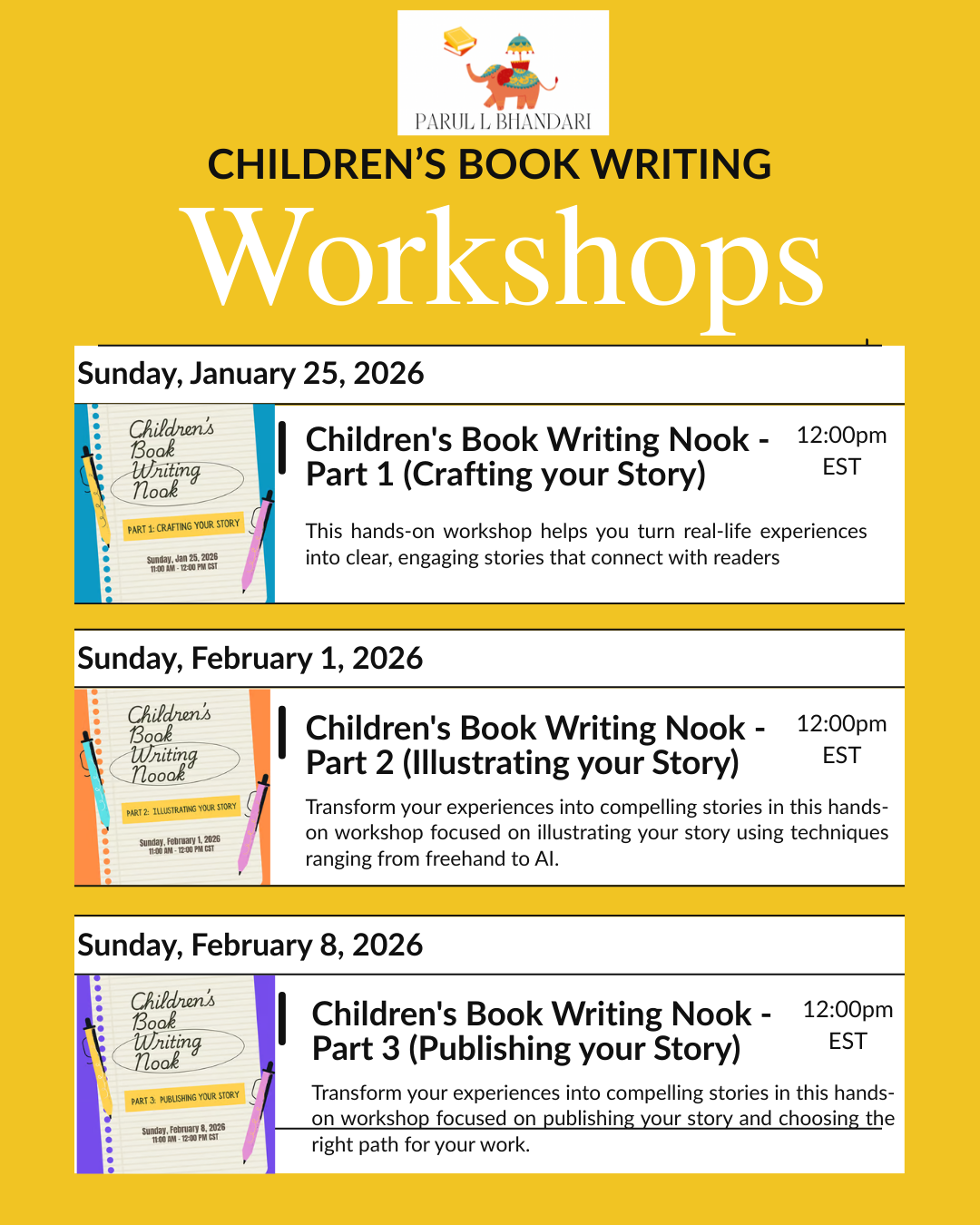
If you’ve ever wondered what magic happens when kids are given space, guidance, and permission to create, then let me tell you about the Children’s Book Writing Nook Workshop Series - a transformative creative experience I launched starting in Jan.

This virtual workshop series is designed to guide young storytellers on a journey from inspiration to publication, meeting them where they are and helping them discover their voices in a safe, fun, and interactive environment.

What the Workshop Series Covers

The Writing Nook is structured as a multi-part series—each session building on the last to help kids and young writers grow their confidence and craft:

Part 1: Crafting Your Story
This session kicks off the series by helping participants turn their real-world experiences into compelling narratives. We explore the elements that make a story engaging—structure, pacing, vivid details, and prompts that spark imagination. Young writers learn to bring their ideas to life on the page through guided activities and creative exercises. Link

Part 2: Illustrating Your Story
Stories aren’t just about words—they’re about bringing characters and worlds to life visually too. In our second workshop, we dive into illustration techniques, from free-hand drawing to exploring digital options, so kids can express themselves through both text and imagery. Link

Part 3: Publishing Your Story
The final session helps young creators understand how to share their stories with the world. We explore different publishing styles and what it takes to prepare work for a broader audience—whether it’s for family and friends or something bigger. This session features insights from expert guests to bring real-world context into the experience. Link

Each session is hosted live on Zoom and recorded for registrants, making it accessible and convenient for families everywhere to participate.

Why This Series Matters

Stories are how we make sense of our world- and your stories deserve to be heard. The Writing Nook isn’t about perfection or polished manuscripts; it’s about nurturing confidence and a lifelong love of expression.

Workshops like this amplify those opportunities - and I’m so thrilled to bring them to life.

Hope to see you there!

About the Instructors

Lorem Ipsum has been the industry's standard dummy text ever since the 1500s.

Looking back on a great 2025

2025 was so rich and full of engagement and culture.

From the Holi events at Navy Pier, to launching 4 new titles, to book fairs, and a very special Diwali season - it was busy and fulfilling.

As I look back on my learnings, I noticed one thing - intentionality which is important. When sharing culture or a thought, it has to be done intentionally.

So here's to a more intentional, purposeful and bright 2026!

-Parul